Refund eligibility Jev pattern
Ask two Nouls: did they request a refund, and does the policy you passed in support one?
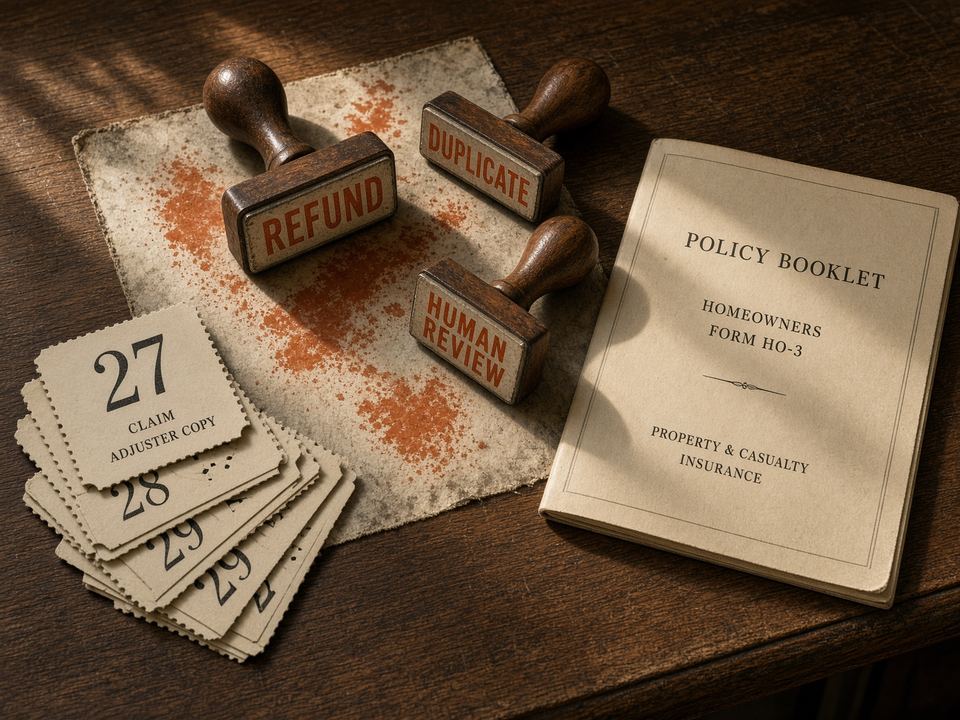
Eligibility is not a vibe. It is “request present?” times “policy allows?”. Keep the policy text in state so the model is judging against your rules, not against internet averages. Combine the two numbers in code — that is where finance policy belongs.
This refund eligibility schema is a paste-ready TypeSafe Jev request for jev-latest. Copy the JSON, keep thresholds in your code, and calibrate on your labels. Jev Patterns is independent and not affiliated with TypeSafe AI.
Use refund eligibility when
- A ticket, chat, or chargeback note might contain a refund request.
- You can pass the relevant policy excerpt in state.
- You want a human to approve the actual money movement.
Do not use refund eligibility when
- You need Jev to calculate proration or tax.
- The policy is not in state and you hope the model remembers it.
- You want a generated apology.
Confidence thresholds for refund eligibility
Keep these in your code. They are not part of the model call.
| When | Action |
|---|---|
| refund_requested.noul >= 0.80 && policy_supports_refund.noul >= 0.80 | Queue a refund for a human to execute |
| refund_requested.noul >= 0.80 && policy_supports_refund.noul <= 0.30 | Send the decline template; do not invent a new policy |
| either Noul is between 0.30 and 0.80 | Human review — 0.5 is unsure, not 'maybe refund half' |
Pass examples
Cancelled by operator
Both Nouls high. Still have a human press the refund button.
{
  "ticket": "Can I get a refund?",
  "policy": "Cancelled flights are eligible for a full refund.",
  "order": {
    "status": "cancelled_by_operator"
  }
}
Change of mind
Request high, policy low. Auto-decline is allowed if you trust the excerpt.
{
  "ticket": "I don't want this anymore. Refund please.",
  "policy": "Change-of-mind returns are not eligible.",
  "order": {
    "status": "fulfilled"
  }
}
Status question only
refund_requested near 0. Do not start a refund workflow.
{
  "ticket": "Has my order shipped?",
  "policy": "Cancelled flights are eligible for a full refund."
}
Ambiguous examples
Store credit vs cash
Request is present. Cash vs credit is not in the policy excerpt.
{
  "ticket": "Can I get my money back or at least credit?",
  "policy": "Cancelled flights are eligible for a full refund."
}
Partial use
“Discretion” is a human word. Keep the Noul in the middle.
{
  "ticket": "Refund the days I didn't use.",
  "policy": "Unused time is refunded pro rata at finance discretion."
}
Policy not passed
Without policy in state, policy_supports_refund is undefined. Do not call it.
{
  "ticket": "Refund please."
}
The problem refund eligibility is for
Ops teams paste refund policy into a chat model and ask “should we refund?” The model writes a paragraph that sounds like a lawyer and then a boolean that does not match the paragraph. Finance still has to read it. Refund eligibility should not produce a paragraph.
This refund eligibility pattern asks two Nouls: is the user asking for a refund, and does the supplied policy excerpt support a refund given the order facts. Money movement stays behind your if statements. Jev never talks to the processor.
If the policy is not in state, policy_supports_refund is a prior, not a reading. That is the whole lesson.
Why this refund eligibility schema uses Jev
Splitting refund_requested from policy_supports_refund stops “they said please” from becoming a payout. A rant without a refund ask should not open a case. A clear ask against a no-refund digital-goods clause should not pay out just because the Noul on the ask is high.
Nouls return probabilities. 0.5 on policy_supports_refund means get a human, not “half refund.” Partial refunds are a finance rule, not a System One primitive.
Do not add a Choice of refund | credit | deny until those are real product actions with owners. Start with the two Nouls.
What to put in state for refund eligibility
Required: order date, product type, amount, reason text, and the policy excerpt that applies to that product. Refund eligibility without the excerpt is fortune telling.
Pass prior refunds on the account if your policy cares. Pass whether the download happened. Pass chargeback status so you do not double pay.
Keep card numbers out of state. You do not need them for refund eligibility.
How to wire refund eligibility in code
If refund_requested.noul >= 0.80 and policy_supports_refund.noul >= 0.85 and amount is under an auto-limit, call your billing API. Else queue. Log both Nouls next to the charge id.
If policy_supports_refund is in the middle, do not round. Show the excerpt and the Noul to an ops person.
Never generate the customer email with Jev. Templates: approved, denied, need-more-info.
Eval plan: replay a month of refund tickets with the policy excerpt that applied that day, not today’s clause. Refund eligibility that reads the wrong contract will look calibrated and still be wrong. Keep the excerpt id in the log.
Failure modes
Policy in the prompt, not in state
Instructions are not the contract. Refund eligibility reads state. Put the clause in the JSON.
Chargeback plus refund
Deterministic: if a chargeback is open, skip the model and follow finance. Do not ask Jev to be your processor.
Talking like support
This pattern does not apologize. It answers two booleans.
Copy, run, calibrate
The JSON in the rail is the refund eligibility request for jev-latest. Copy it into your stack, or open Refund eligibility in Jev Studio and draw the fixture bars. Thresholds stay in your repository. Calibrate on your labels before you auto-apply. Official model docs live at docs.typesafe.ai. Jev Patterns is independent and not affiliated with TypeSafe AI.
Related reading: Choice, Score, Noul, confidence thresholds, when not to use Jev.
Refund eligibility: FAQ
- What is the refund eligibility Jev pattern?
- Refund eligibility uses two Nouls: refund_requested and policy_supports_refund. You supply order facts and the policy excerpt; your code moves the money.
- Can refund eligibility issue the refund?
- No. Jev returns probabilities. Your billing API issues the refund when both Nouls and your amount cap clear.
- Why two Nouls for refund eligibility?
- Asking and being allowed are different facts. A clear ask against a forbidding clause should not pay out.
- What if the policy excerpt is missing?
- Do not run refund eligibility. Fetch the clause first. A Noul without the text is a guess.
- Is refund eligibility legal advice?
- No. It is a starting schema. Calibrate on your own cases. Jev Patterns is not affiliated with TypeSafe AI and does not practice law.
Last reviewed 21 September 2026. Independent of TypeSafe AI.
Next
Related Jev Patterns

Support
Escalate to human
A single Noul: should a person take this over from the bot or the junior queue?
Support
Support ticket routing
Send a ticket to the right department and flag whether it should jump the queue.

Guardrails
Eval judge
Given a claim and a passage, choose supports, contradicts, or says nothing.

Studio
Run Refund eligibility in Studio
Fixture bars first. Optional live call stays in this browser.